
The man that started it all: Ken Tyrrell
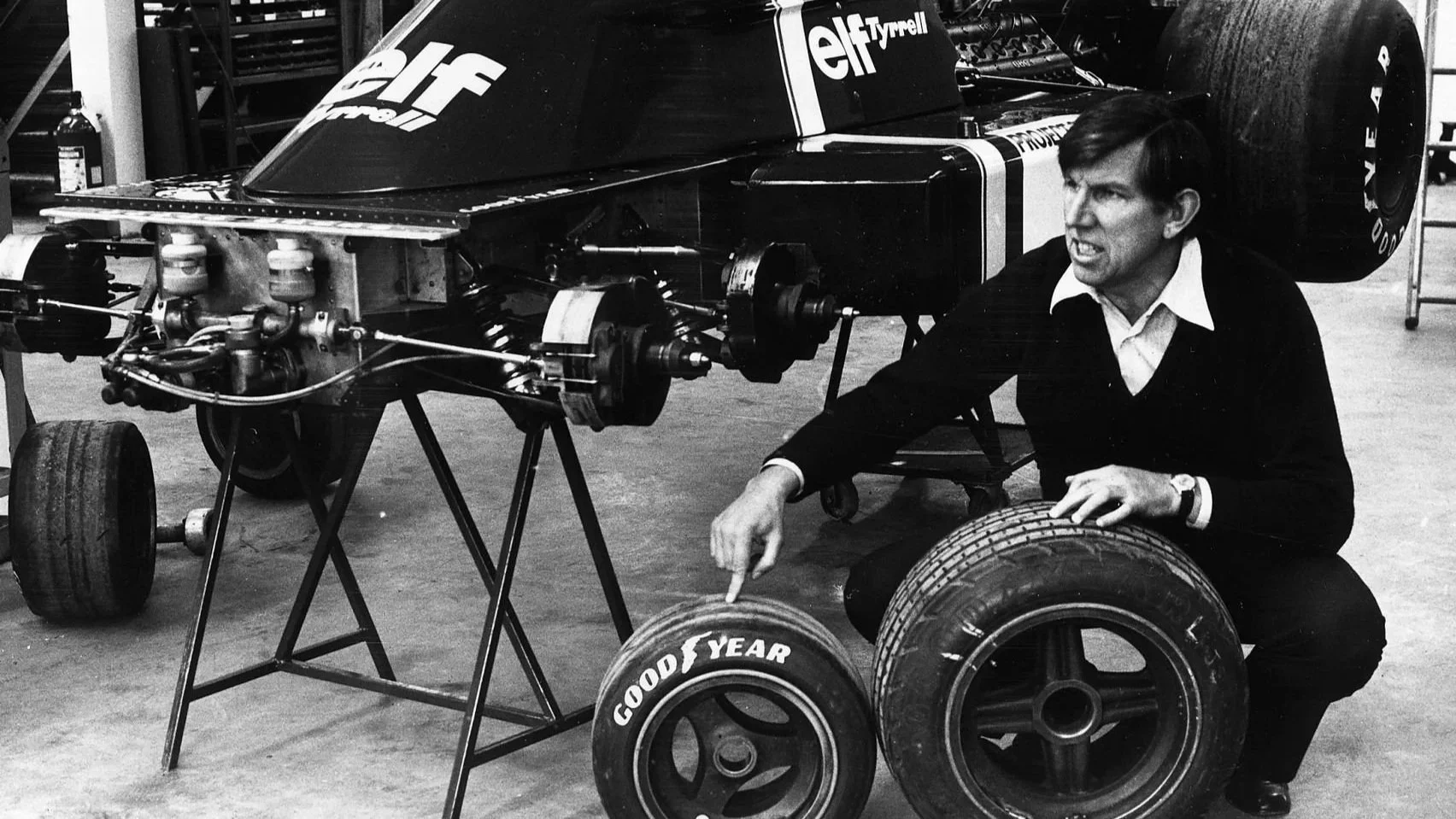
There is a temptation when it comes to Tyrrell, to start at the top step.
The championships, the famous drivers, the improbable wins, the cars that looked like they had been sketched during an argument and then built anyway. But if you are trying to understand Ken Tyrrell the person, the story begins much earlier, in a place where the world’s most advanced sport had no business existing at all.
From the woods of Ockham to the streets of Monaco
It begins in Surrey, at Ockham, where the team’s mythology is almost too neat to trust. The woods. The timber yard. The sheds.
A founder-principal who ran a Grand Prix operation from a timber business, and did not apologise for how unglamorous it looked. Tyrrell grew from the woods of Ockham to race the streets of Monaco, proving that British engineering and innovation could beat anyone.
The shed matters because it was not a metaphor.
The iconic Tyrrell shed, (now permanently at Goodwood), started life as an ex-military shed, later bought by the Tyrrell family for £50 to serve as a woodshed in their timber yard. Long before the sport became obsessed with glass and carbon and “campuses”, Ken’s base was wood and tools and the discipline of making do. That discipline became a competitive advantage. It shaped how he hired, how he spent, how he argued, and how he decided what mattered.
And it shaped what he refused to become.
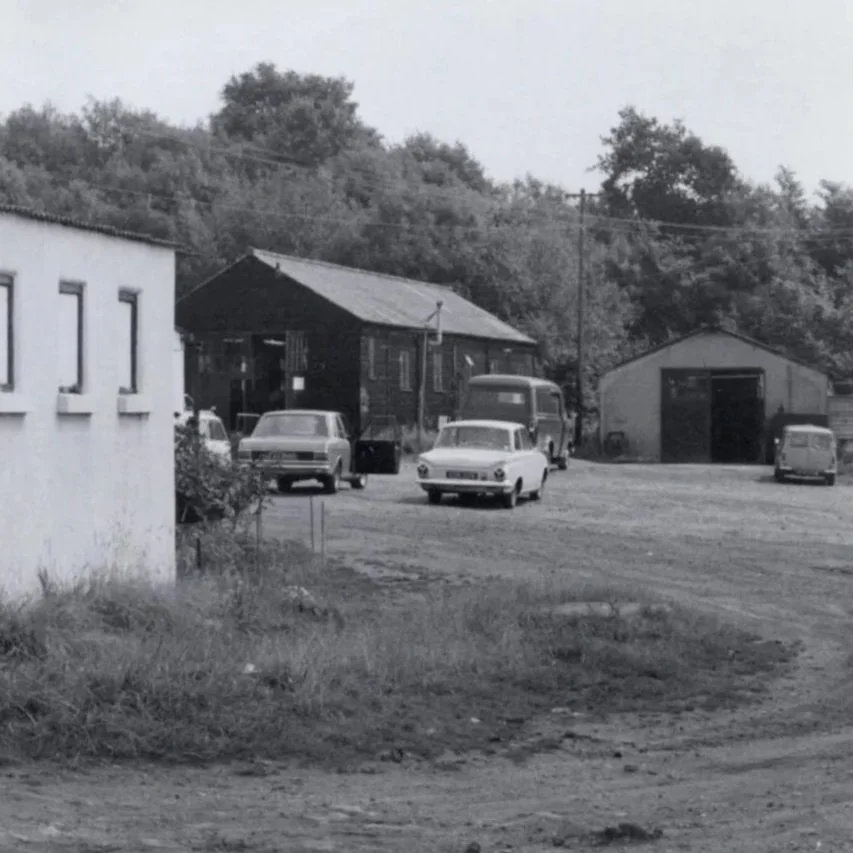
The building started life as an ex-military shed, later bought by the Tyrrell family for £50
We see Ken as a kind of rebel, thumbing his nose at Formula 1’s growing corporatisation by doing it his way from that timber yard. The important nuance is that Ken’s rebellion was rarely performative. It was functional. He was not anti-progress. He was anti-pretence. He believed in standards, in competence, and in winning on honest terms.
You can hear that same blunt practicality in how he spoke about himself.
The Independent obituary sets out the arc in a way Ken would probably have approved of: straightforward, human, occasionally unflattering. Born in East Horsley in 1924, he harboured ambitions as a driver and did race, including winning a race at Karlskoga. But he was ruthless about his own ceiling. “I probably wasn’t brave enough,” he said, looking back.
That sentence is a pivot point. It is not self-pity. It is not false modesty. It is a founder realising where the real leverage is.
Ken did not need to be the bravest man in the car. He needed to build the environment that made brave, gifted people dangerous. He needed to choose the right drivers, the right engineers, the right moments to take a risk, and the right moments to dig in and refuse. That is why Tyrrell’s beginnings were based in quiet conviction rather than grand vision: the belief that with the right people, the right engineering, and a clear point of view, it was possible to beat the best.
Ken’s gift was not that he was the smartest engineer in the room.
It was that he knew what good looked like, and he could recognise it early.
One of the cleanest examples sits in the Matra years, because the story is full of the kind of detail that makes it feel real, not polished. In a 1969 Motor Sport interview, Ken admitted: “I’d never heard of Matra.” He describes trying to be “helpful” by telling Matra that the first thing they needed was a driver, and being met with the disarming reply: “You’ve got the driver.”
That reply lands because it reveals how Ken operated. He was always talent-spotting, always thinking in systems. He saw “driver” as the starting point of any serious programme. Matra, with aerospace-level manufacturing and state backing, looked at Ken and essentially said: you already have the anchor.
What follows is not a glamorous story of instant triumph. It is a logistical, wintery, practical story. The mechanics collect the car at Gatwick. They take it to Goodwood on a bitterly cold day. Stewart runs a few laps and comes back saying he has never driven a car that put power down like it. The kind of anecdote that, in another sport, would be spun into destiny. In Ken’s world it was simply evidence. The car is good. The programme is serious. We proceed.
Ken’s partnership with Jackie Stewart became legendary partly because it was old-fashioned even then.
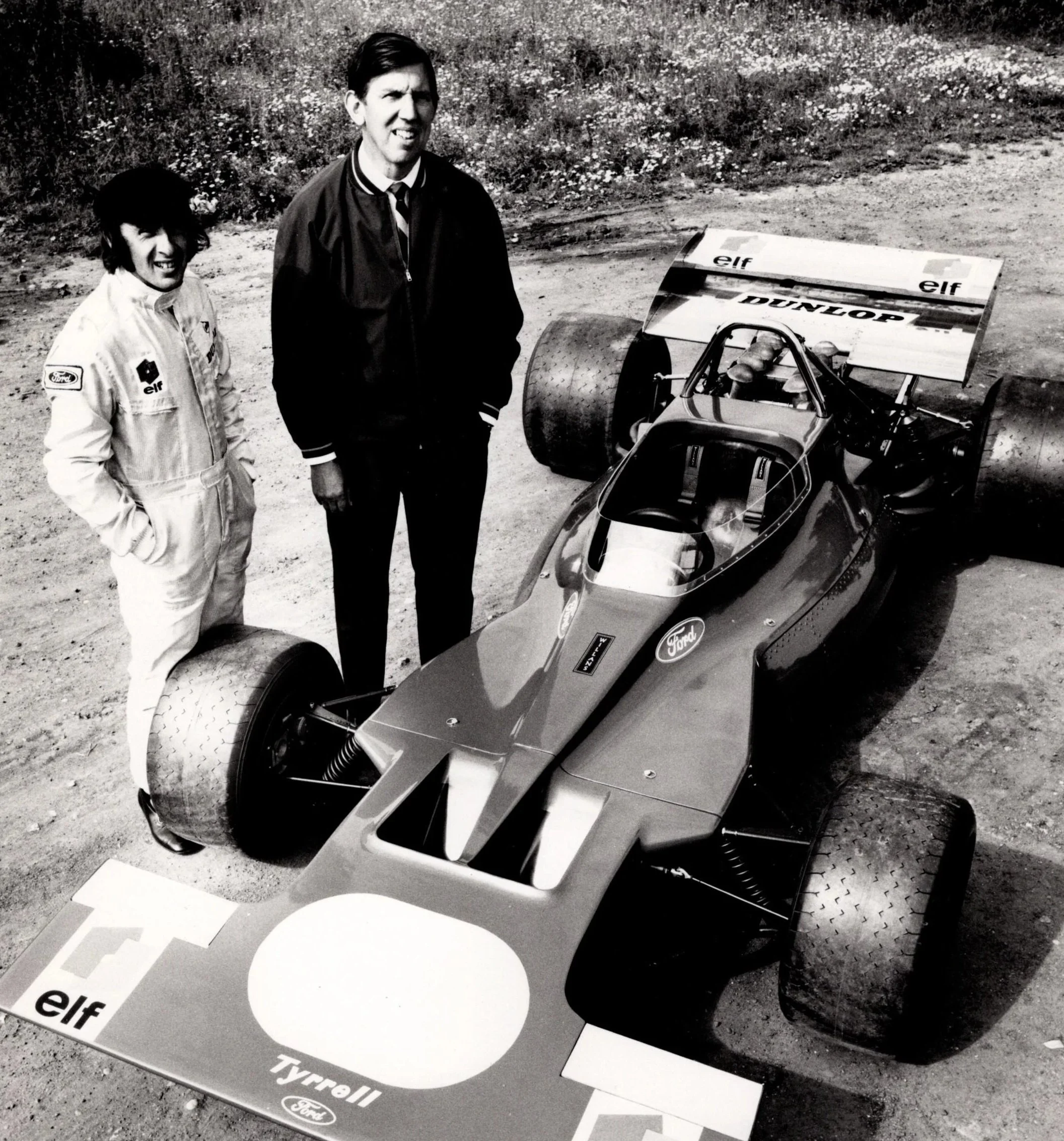
“We never had a written contract in all the time I drove for him, just a handshake.”
The Guardian quotes Jackie Steward as saying “We never had a written contract in all the time I drove for him, just a handshake.” In a modern context, that can sound naive. In Ken’s context, it was an expression of how he calibrated trust. A handshake was not a vibe. It was a bond with consequences.
That handshake culture also tells you something about the kind of authority Ken had.
He was not a corporate executive managing up and managing down. He was a team principal who was close enough to the work, and close enough to the people, that the relationship itself carried the weight. For Tyrrell, people mattered more than polish. He was a skilled engineer, but as a servant leader is how we reflect on Ken’s leadership style.
Ken could be warm, and he could be hilarious, and he could also be brutal.
But this is where it is important to resist the temptation to turn him into a cuddly character.
Ken could be warm, and he could be hilarious, and he could also be brutal.
The Independent describes his “froth-jobs”, infrequent but explosive tantrums that could be devastating if you were in the blast zone, then almost instantly forgotten. Within moments, the same man might be pouring tea and talking about cricket scores or Tottenham. The rhythm is revealing: anger as a flash of standards being violated, followed by a reset that refuses to let ego calcify into cruelty.
Even Stewart, who had reason to be sensitive about management pressure, remembered Ken in similarly direct terms: “He was an absolutely straight shooter.” Again, not subtle, not politically lubricated, but clean.
Ken’s directness could also be startling. Jonathan Palmer’s memory of Tyrrell asking him candidly, “Isn’t it about time you stopped racing?” after Alesi outpaced him early on. It is not hard to imagine how that would land, especially in a paddock built on vanity. But it fits Ken’s pattern: he valued truth over comfort, and he asked the question he believed nobody else was brave enough to ask.
That is the same instinct that made him influential beyond his own team.
Late in his career, when he no longer had the results leverage of the top teams, but he was defiant, standing alongside other owners in refusing to sign parts of the Concorde Agreement, holding to principle even when it made him unpopular with the power brokers. Ken’s reputation for integrity is not a sentiment. It is documented behaviour.
“Ken’s reputation for integrity is not a sentiment…
It is documented behaviour.”
Then there is the part of Ken’s story that stops being charming at all.
It is easy, when you write team histories, to mention François Cevert as a driver, a talent, a tragedy, and then move on. When you write Ken’s story, you cannot move on quickly, because Cevert’s death is not only a motorsport moment. It is a personal rupture.
Tyrrell had been intending for Cevert to succeed Stewart and was “shattered” by the death at Watkins Glen in 1973. Ken’s admitted that he considered stopping, and then describes why he did not: people relied on him, and staying gave him a chance to influence safety.
That is Ken again: grief filtered through responsibility. Emotion acknowledged, then turned into duty.
It is also the moment where you can feel the cost of “motorsport should be human”.
The later years add another layer to the cost of racing in Formula 1: the price of staying yourself in a sport that is changing around you.
Ken grew frustrated at “taking part at the level that we had fallen to” and how selling became the only way to drag the team out of that decline. He did not romanticise being an underdog if it meant being irrelevant. For Ken, being “independent” was not the goal. Competing properly was.
Motor Sport’s Matt Bishop gives a small, domestic scene that makes this loss feel concrete. In 1998, after the sale, Bishop watched the Argentine Grand Prix with Ken at home, Easter Sunday, with Earl Grey and hot cross buns because Norah told him he should serve them. It is both ordinary and heartbreaking. The man who had not missed a Grand Prix weekend in decades is now on the sofa, watching other people do the work, and admitting, simply, that “not being a part of things is very hard.”
That scene matters because it fights the easy interpretation of Ken as a stubborn throwback who refused to evolve.
He evolved constantly. What he refused to do was pretend.
His team started in the late 1950s as a small outfit in Surrey, running junior formula cars, and grew into one of the sport’s defining independents. It entered Formula 1 in 1968 and accumulated 33 Grand Prix victories and multiple titles across the Stewart era and beyond. Those numbers are important, but only as evidence that his methods worked. They are not the heart of the founder story.
The heart is the stance.
When Ken started the team it wasn’t about sponsorship, it was about shared conviction and performance, and the belief that good engineering could beat anyone. That line is authentic. It is a direct read on Ken’s life choices: he treated racing as a craft, not a theatre.
That is why his most quoted line is so bleak and so honest.
“Motor racing is a disease.
The only way to get rid of it is to die.”
Ken is remembered saying: “Motor racing is a disease. The only way you get rid of it is to die.” It is as funny as it is grim, and it is exactly the kind of truth that makes a founder feel real rather than commemorated.
Ken Tyrrell is not interesting because he “led a team”.
He is interesting because he represents a kind of leadership the sport has largely priced out: the founder-principal whose authority came from judgement, craft, and standards, rather than corporate structure. A founder who had real experience behind the wheel, and understood deeply what it took to compete and win at the highest level. He was close enough to the work to know what mattered, close enough to people to be loved and feared, and stubborn enough to keep the operation human even as the sport pushed toward something smoother, more marketable, and less forgiving.
Today we think of Tyrrell as “Built Different. Raced Properly.” You can read it as Ken’s biography in four words.
And if you want the final connector between then and now, it’s that: “The Tyrrell name belongs on the track. Our history is lived… not just retold.”
That is the only kind of tribute Ken would have respected.
